The modern actuarial function — built for the next decade, not the last one
Three forces are converging in 2026 that make this moment different from previous inflection points. A reference operating model for general insurance actuarial teams.
The actuarial function in a general insurer has traditionally operated in cycles. Quarterly reserving close. Annual Financial Condition Report. Periodic capital review.
That rhythm made sense when the outputs were periodic. It makes less sense when the business expects continuous pricing responses, live reserve monitoring and real-time capital visibility — all at once.
Three things have converged in 2026 that make this moment different from previous inflection points in the profession.
Three forces, converging now
Technology has crossed a threshold. For the first time, AI systems can reason across a problem, sequence tasks and act across connected tools — end to end, without a human orchestrating each step. For actuaries, the work that dominates most cycles — data reconciliation, routine model runs, first-draft commentary — is exactly the kind of multi-step, rule-shaped work these systems were built for. This is not a future capability. It is already in production at insurers who have moved early.
Leaders are rebuilding from scratch. The insurers moving fastest are not automating existing processes. They are redesigning workflows to be AI-first — asking what the process would look like if built today, not where a tool can be inserted. The difference matters: augmenting a broken workflow produces marginal gains. Redesigning it produces a different function.
APRA has formed a view. That is the signal. APRA’s April 2026 letter to industry is explicit: existing assurance practices are insufficient for agentic systems, and the governance model needs to be rebuilt, not patched. The point is not to slow down. It is that adoption has reached a threshold where governance must keep up. Functions that understand what APRA is asking for — and can demonstrate they are building to that standard — will have a structural advantage over those that treat it as overhead.
A reference model for what “better” looks like
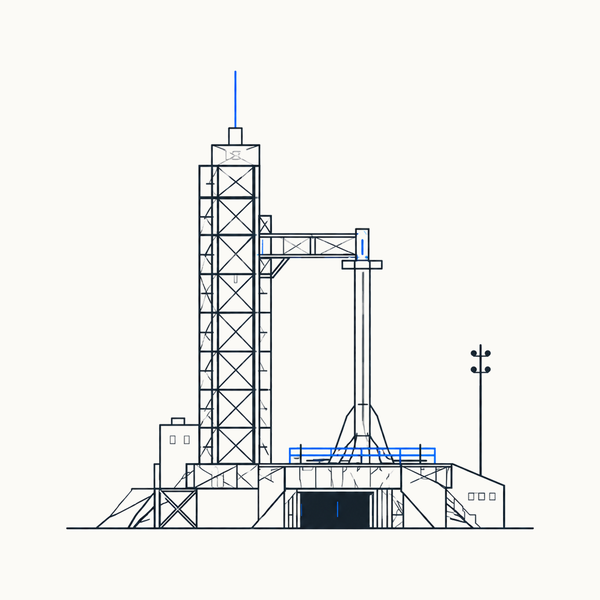
The modern actuarial function has three layers. Each depends on the one before it. You cannot skip the foundation.
 Launch Complex
The data foundation
Launch Complex
The data foundation Payload
The insight engine
Payload
The insight engine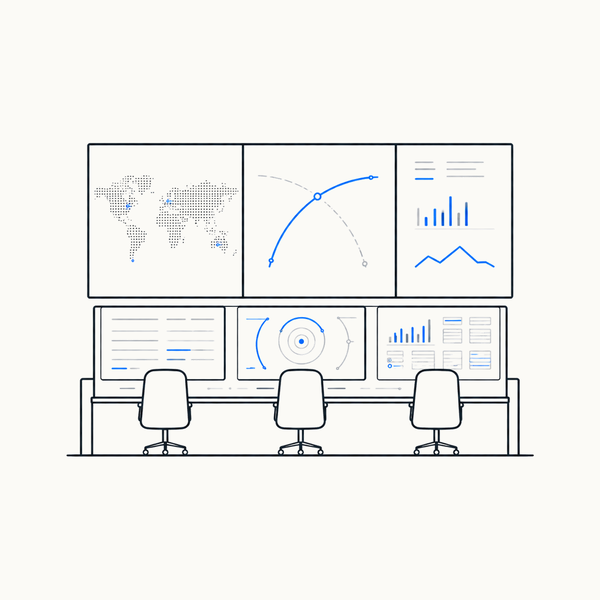 Mission Control
Continuous monitoring
Mission Control
Continuous monitoringThe data foundation. Every model is only as good as the data it runs on. Most of the cycle is spent on data, not analysis. Actuaries need the skills and the tools to truly own their data — the definitions, the lineage, the pipelines. Alignment with finance and the broader business is key; actuaries are well placed to drive it, but they have to want to. Fix the substrate once, and the compounding starts immediately.
The insight engine. A sound foundation unlocks the full range of actuarial technique. Standard methods are the baseline, not the differentiator. Sophisticated technique matters only when the foundation supports it. Explainable pricing, individual claim reserving and credible capital work all depend on clean, well-governed data beneath them.
Continuous monitoring. The function that senses risk in real time advises before the damage is done. The quarterly cycle is a structural constraint, not a design choice. Live data flows and exception signals mean the function can watch continuously. The judgement stays human; the evidence base becomes current.
Each layer depends on the one before it. The sequence is the strategy.
Where most functions actually are
Most actuarial functions are running the insight engine from a fragile foundation — and have barely conceptualised continuous monitoring.
The gaps hurt in specific, recognisable ways:
- Senior actuaries doing reconciliation work. A data tax on every analyst in the value chain.
- Valuation cycles measured in weeks or months. Insufficient time to understand what actually matters before the next cycle starts.
- Experience deteriorations seen too late. Important signals flowing from the business to the actuaries, not the other way around.
- The institutional knowledge walking out when the expert leaves.
The aspiration is not more AI. It is all three layers, well established and working together.
Three positions worth taking
The constraint is data, not AI. Most functions overspend on the insight engine and underfund the foundation. The unglamorous work of data definitions, lineage and a proper semantic layer is what determines whether anything else works. Invest in the foundation before the model — and insist on the tools to persist and maintain it. The compounding only starts when the substrate is real.
Don’t augment. Redesign. Adding an AI assistant to a broken workflow produces marginal gains and substantial governance debt. The functions getting real value ask: if we built this from scratch with these tools, what would it look like? The answer is a reimagined process for a different team than the one you have today. That is not a comfortable question. It is the right one.
People are the differentiator. Technology is increasingly delivering analytical capability via an API. To stay ahead, insurers need the right people to harness it — not just to use the tools, but to own the definitions, challenge the outputs and govern the systems at scale. Hiring more actuaries into an unredesigned function does not solve this.
The capability progression
The modern actuarial team needs three levels of data capability, and most functions have too few people in the upper tiers.
The Operator can pull data from the warehouse, run a SQL query against a known table and use Excel reliably. They own their own analysis and are accountable for its accuracy.
The Practitioner can build a reproducible pipeline, version-control their code and document a dataset for someone else’s use. They challenge data definitions rather than accepting them. They own the team’s pipelines and reusable assets.
The Architect can design the data model extension for a new product, specify the feature store contract and define data requirements directly with engineering. They own the substrate the whole function operates on.
Most actuaries today sit at Operator or mid-Practitioner level. Tomorrow’s baseline is full Practitioner. A small Architect cadre is not optional.
What this looks like in practice
Today: a quarterly close consuming four to six weeks. Senior actuaries reconciling extracts and chasing handler queries. Material movements explained retrospectively. The Financial Condition Report drafted from a blank page each year.
In the near term: a daily reserve signal flowing from streaming exposure and claims data. An agent surfaces movements above threshold and drafts an investigation brief with citations to source. The Domain Actuary reviews, applies judgement, accepts or escalates. The FCR is assembled, not drafted — the Appointed Actuary’s judgement layered on top of evidence the function has already produced.
Same people. Fundamentally different work. The quarterly close is no longer the heartbeat.
Six things for the next eighteen months
i. Name a data owner. An actuary, not a technology person. Give them the mandate to define the data the function depends on, end to end. This is the single highest-leverage appointment most functions can make.
ii. Build the model inventory. Every model, every agent, every use case — classified by tier, owned by name. You cannot govern what you have not counted.
iii. Retire the obsolete techniques. Free the senior time, reclaim the model risk, reduce the audit surface. Most functions know exactly what these are. The obstacle is political, not technical.
iv. Identify the five archetype roles. Domain Actuary, Data Architect, Modelling Specialist, AI Orchestrator, Model Risk Actuary. Name the gaps. Most functions have the first and are missing the last two.
v. Hire what you cannot develop fast enough. For most functions: the AI Orchestrator or the Model Risk Actuary. The qualification pipeline will not produce these people in the timeframe the market requires.
vi. Pilot one continuous monitoring use case. End to end. Real time. To prove the pattern, not the technology. Pick a signal that matters, build the workflow around it, and make the output visible to a decision-maker.
The function will be different in eighteen months. The choice is whether the difference is deliberate or accidental.
Advera Labs builds tools for insurance professionals. Providence — our facilitated insurance simulation — is designed for exactly this kind of capability development. Discuss a Providence pilot.